NVIDIA stories
Fans will get round-the-clock venue help as the software firm deepens its public sector AI push, with defence revenue up 80% year on year.
The chipmaker's technology is now embedded across robotaxi development, underscoring its role in a market Nvidia says could hit USD $400 billion by 2035.
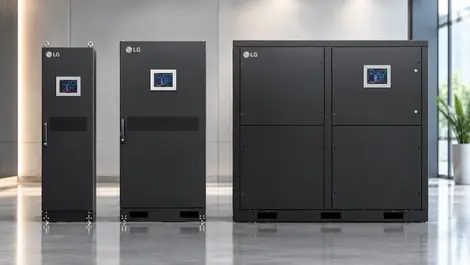
As AI racks draw more power, data centre operators are shifting to liquid cooling, and LG's latest unit now meets NVIDIA's reference design requirements.
It lets regulated firms run AI on sensitive data without exposing customer records or model weights to infrastructure operators.
Enterprises could cut AI ingestion errors and token costs as the new tool keeps sensitive documents on premises or in a chosen cloud.
Utilities and cloud operators could squeeze more AI work from fixed power budgets as Nvidia's DSX software lifts throughput and cuts demand.
Electricity is becoming the main bottleneck for AI data centres as new Nvidia partnerships aim to raise output per megawatt.
High-end RTX users can now keep sensitive work on-device as Perplexity extends its local AI agent to supported Windows PCs.
Most AI projects stall because firms lack the standards and monitoring needed to keep models trustworthy, auditable and scalable in production.
Growing alarm over AI safety has intensified after another former Google DeepMind engineer warned the technology could escape human control.
Enterprises can now extract data from unseen document types without templates, as ABBYY rolls out zero-shot capabilities in Vantage.
The open-source release could cut the time and coding needed to build quantum applications for researchers using standard PCs and GPUs.
Interrupted batch workloads can now resume where they stopped, potentially cutting wasted compute and delays for Google Cloud customers.
Banks and large enterprises in Asia-Pacific are rethinking cloud-first AI plans as costs, sovereignty and regulation favour hybrid deployments.
The buildout could give Australian startups, universities and enterprises more local AI compute as demand for training and inference rises.
The ranking bolsters its pitch that enterprises need centralised controls as AI adoption widens attack surfaces across cloud and on-premise networks.
The technology's next test is whether it can cut energy use and waste as firms face growing pressure to deploy AI more responsibly.
The new group could speed up connections for AI data centres by letting them cut demand when power grids are under strain.
The model is already being piloted by customers as Salesforce pushes AI deeper into CRM workflows with fewer errors and more control.
Fears are mounting that unchecked AI could unleash cyberattacks, market shocks and job losses long before any extinction event.


.webp)